Bi’Bak is a kino, event space and archive focused to Turkish culture in Berlin, and more broadly migrant experiences.
Can Sungu presents ‘Please Rewind’ at Bi’Bak Kino
On Thursday 28 November 2019 Can Sungu delivered a talk and screening on Turkish film and video culture in Berlin. It emerged in the 1960s with Gast workers bringing in film reels to Munich. Here they would book out kinos at odd times, eg 9.30 am, and play to full houses of recent immigrants. Soon kinos popped up in major cities such as Stuttgart, Hamburg and Berlin, catering to the Turkish community. The culture expanded dramatically and in the 1980s with the advent of video. Films were also made in Berlin employing a range of tropes and stereotypes to describe the migrant experience and it’s relationship to the ‘homeland’. Video saw the demise of the Kinos, and a video piracy market also developed alongside regular rentals. A dubbing industry for Bollywood films and Danish porn also developed to serve the migrant market!
Today I met up with Moro Yapha one of the producers of We Are Born Free Empowerment Radio, an activist radio founded by refugees broadcasting live out of Kreuzberg on Fridays, Saturdays and Sundays between 13.00–16.00.
Moro told me the radio which launched in 2015 in a Projektspace made available to them from the inhabitants of Waldemarstraße 46., following the Oplatz Occupation nearby (October 2012–April 2014).
The media activist radio took part in Kotti FM, which ran 24-hours-per-day over September 2016.
Alongside Moro, from Gambia, the station is run by Muhammed Lamin Jadama, also from Gambia, and Bino Byansi Byakuleka from Uganda. Located in a supportive Keiz, the radio station/media centre connects directly with the neighbourhood, with a street front door and locals reguarly dropping by during broadcast hours. The projektraum also hosts meetings and workshops. With the cramped studio housed in a small windowless room around the back, Moro tells me it is a space that nevertheless inspires self-confidence and is a safe space for his brothers and sisters. It is place they can some to hang out, cook food and socialise, not like a ‘proper’ radio studio where they would be allocated a timeslot after which they would have to leave.
The station which broadcasts in Berlin via Reboot FM also has a significant audience in Africa, who most often listen in via Facebook. It also connects to students at Humbolt University and their partners in the US. Moro also tells me they have collaborated with a number of organisations to produce remote broadcast events including SAVVY Contemporary, YAAM, Haus der Kulturen der Welt, Africa Avenir and have also run workshops for refugee youth housed at the former Templehof airport.
Alongside refugee issues, the radio also advocates for range of minority rights including gender, race and ablism.
willful acts of unruliness
agents of knowledge resisting knowledge objects
scale autonomy
decoupling publics from the state
a game of tinkering with the parameters of the given
emerges from a compulsion to participate and the fatigue to respond
a question of publics
tied to the social production of value
as parametric politics
A poem of sorts cribbed from an essay by Clemens Apprich and Ned Rossiter ‘Sovereign media, critical infrastructures and political subjectivity’ (2016).
Concerned with the shadow libraries such as Library Genesis and aaaarg.fail that collect and serve to distribute texts (and thus knowledge) beyond academic and economic constraints, Apprich and Rossiter discuss ideas about subjectivities that arise when developing sovereign media networks and autonomous critical infrastructure:
How, then, to conceive a political imagination designed not around a reconstitution of the liberal subject inherent in appeals to the public, but rather a subjectivity that emerges from the collective production of infrastructure and knowledge that is underlined by an anticipatory politics in a world gone to ruin? … How, in other words, to think of sociality beyond the state yet immanent to digital infrastructures of communication and knowledge production? (p. 277)
They go on to cite the example of Brazil in the early 2000s in which the Ministry of Culture sponsored media activists to develop digital inclusion and literacy in the country. Apprich and Rossiter claim this temporary coalition between the state and activists changed the ‘face’ of media activism from white middle-class producers to ‘more diverse and eclectic grassroots groups, which included hip-hop crews, Indymedia hackers, popular culture producers, as well as activists from black and indigenous movements’ (pp 278-279). Giving for example the media network MetaReciclagem as a name anyone can adopt, which interests me as a collective entity or identity.
In their discussion of such politics of shadow libraries and recycled technologies they claim ‘template cultures have become today’s iron cage of reason’ as they advocate for sovereign media’s potential of restoring the ‘’90s net-cultural promise of producing your own media as the material basis of collective organization, yet have to do so in a post-Snowden environment of secrecy.’
Apprich, C & Rossiter, N 2016, ‘Sovereign media, critical infrastructures and political subjectivity’, in R Bishop, K Gansing, J Parikka & E Wilk (eds), Across & beyond: a transmediale reader on post-digital practices, concepts and institutions, Sternberg Press, Berlin, pp. 270-83.
A scene from a short film created as part of the 2016 Technoshamanism festival video workshop.
From an interview conducted by Beatriz Garcia, publisher of the Spanish Laudano Magazine, with Fabiane M. Borges, Carsten Agger, Ariane Stolfi and Raisa Inocêncio, participants of the technoshamanism network. English translation by Carsten Agger, Ariane Stolfi, Isabella Aurora and Iaci Kupalua.
We can give a Brazilian point of view that doesn’t represent the history of all the people involved in this network. Since the network is diverse and alter-globalist, each person has their own vision of how they became a part of it. But from a Brazilian perspective we could start with the World Social Forums in Porto Alegre since 2001, where there were already practices that related ‘do it yourself’ culture with traditional cultures and permaculture, where lots of people from free software and DIY networks had met. We could also situate as a specific point the Media Tática Brasil Festival (MTB, “Tactical Media Brazil”), which happened in 2003 in Casa das Rosas, organized by activist groups working with free software and urban art. At that time, the Leftist Party had come to power through the election of president Lula (PT), who nominated Gilberto Gil as Minister of Culture. Gil joined the MTB and expressed interest in taking the project inside the ministry. Very shortly, activist groups were implementing one of the PT government’s biggest Free Software projects, called Cultural Hotspots (pontos de cultura).
Through the implementation of this program, hundreds of hackers, hacktivists and open-source programmers gained access to a ‘deep Brazil’ consisting of communities and ways of life very different from those of the big cities. The word “technoshamanism” started to appear about that time, as a consequence of the meeting of the implementers with traditional Afro-Brazilian, indigenous and riverside communities. The sensation arose that the Free Software movement was not only about technological inclusion but also a meeting point for different cultures, perspectives, knowledges and technologies. It was at this point that the word “technoshamanism” started to show up in the networks, with a number of connotations, some of them more technophobic and other more technophile, but the essence was a re-enchantment with the native cultures, with shamanism, with magic and with the idea that the technologic production was very far from its immanent potential and from the connection with Planet Earth. So in 2014, when the majority of the implementers of the program had already left their government jobs, we decided to make the I International festival of Technoshamanism, following a tradition of festivals that used to relate free software with alternatives or traditionals ways of life as Digitophagy, Submediology, Metarecycling, Tropixel, Technomagic, Satelliteless movement, etc.
The first Festival of Technoshamanism was organized in Arraial d’Ajuda, in the Itapeco Institute of Permaculture, with collaboration of the Bailux lab (an offshoot of the Meteracycling network) the Hacker Bus, Voodoohop, LCCP – laboratory of body-creation-performance-interference, the Pataxó from nearby Aldeia Velha and lots of other contributors. At that festival, it was more clearly defined what technoshamanism is about: 1) Plant
Technology, agroforests, permaculture, water springs, seed banks etc; 2) Production of communities, coexistence, exchange of knowledge and free technology, relations between different communities; 3) Free software, open source, do it yourself culture; 4) Art, subjectivity and electronic technologies: rituals, aesthetic production, music, cinema, videos, performances, imaginary and fictional construction, medicinal plants, teas, baths, all at the same time and now.
After the I Festival several meetings happened, in many of them other partnerships were made, with people from networks like Cryptorave, Chaos Magic, Climatic Caravan, Hacker Bus, Hacker Camping, Baobáxia, etc.
The current stage is to decentralize technoshamanism from Brazil, so the III International Festival will be held near Aarhus (Denmark) under the care of Carsten Agger in July or August of 2019.
A lot of my work has focused on the internet as a colonized space and neocolonial technology, which had me yearning for other ways to connect. At the same time I found myself in spiritual communities in which I discovered spiritual technologies. My spiritual practice revealed decolonial technologies as a set of networked practices that were essentially ICTs—Information and Communication Technologies.
Tabita Rezaire interviewed on Rhizome.
[vimeo 247826259 w=640 h=360] PREMIUM CONNECT from TABITA REZAIRE on Vimeo.
In December 2018 the Australian Government passed the ‘Telecommunications and Other Legislation Amendment (Assistance and Access) Bill 2018’ also known as the ‘Anti-Encryption Bill’. The Act compels tech companies—like Apple, Facebook and WhatsApp—to allow Australian Security Services access to encrypted products, services, messages and data. Effectively weakening data-security universally, it has been widely criticised.
According to a report in Wired, the Bill is ‘overly broad, vaguely worded and potentially dangerous.’ On top of compelling companies to weaken there services the law also enables government officials to approach key employees of a company with their demands, rather than the company itself:
In practice, they can force the engineer or IT administrator in charge of vetting and pushing out a product’s updates to undermine its security. In some situations, the government could even compel the individual or a small group of people to carry this out in secret. Under the Australian law, companies that fail or refuse to comply with these orders will face fines up to about $7.3 million. Individuals who resist could face prison time.
In his submission to Australia’s Parliamentary Joint Committee on Intelligence and Security in October 2018, Joe Cannataci, the United Nations Special Rapporteur on the right to privacy described the legislation as ‘fatally flawed’ and advised the committee that it should be put aside, stating:
In the absence of a prohibition on or independent oversight to approve such requests, it will be important to establish conclusively that Australia is not becoming a ‘launderer’ of international requests for data.
The Law Council of Australia has criticized the government for rushing the legislation through Parliament. A draft version of the bill was only presented back in August, while lawmakers had just a day to review the results of a parliamentary committee’s investigation before voting on the bill on Thursday. The opposition Labor Party agreed to drop all 173 of the amendments it initially proposed for the bill in order for it to be passed on the final day of Parliament this year. The amendments are now due to be raised for debate in 2019.
I feel that we need to find a way to liberate ourselves from centralized media and entertainment, and realize that we are not in fact consumers but actors. We need to get a bit uncomfortable and dim the ego, to dive deeper and find that it’s better to try and understand that we are all connected, organically. When we communicate, we don’t actually need to reach the whole world, we just need someone to listen and respond in some way. So it’s not mass media, it’s person to person communication. And to form a living community, we need to have a good platform and an inviting space. Radio is so very powerful because it can be very intimate, and it is free from the burden of images that instantly take hold of our thought, and thus gives room for your imagination.
Histri[s]onics Meshwork Radio proposes to work in the overlap of sound, text, performance and code. It will utilise free open source software and draw on maker/hacker ethics, migrant media networks and sound enthusiast practices.
Over 2019 I will develop a series of works for radio, such as recordings, scripts and scores for sonic-social happenings, that reflect diaspora experiences. I am specifically interested in South Asian and Black expressions in music and broadcast media, which often come to ground as localised sound cultures. I am curious to investigate local DIY music scenes, experimental artists, irregular music formats, zine makers, instrument builders, field recording specialists and sound system obsessives.
A ‘meshwork’ is a means of organising a local network via independent, possibly roaming, nodes rather than from a centralised hub. The stability and reach of the meshwork is determined by the number and distribution of these nodes. By emphasising the cultural aspects of open source movements I want to explore what can happen when people gather to perform a temporary experimental media infrastructure.
My recent residency at Procomum LABxSantos Brazil (2018) rekindled my earlier interests in public sound culture. I learned that popular music forms, such as Samba, Funk and MPB (pop), defiantly convey suppressed histories and beliefs, and penetrate all facets of life. This was especially pronounced during the October 2018 presidential elections. Whilst producing my project Lunch Against Work: Almoço Contra o Trabalho, I was exposed to the legacies of state backed initiatives to develop open source software and culture in the early 2000s. This was taken up by many as a struggle for the commons and aligned with Indigenous and (post-slavery) Black struggles.
Early net cultures’ optimism about the emancipatory potential of the internet has withered in the current era of networked governance, digital surveillance and data extraction. Revelations about state spying and allegations that data analysis firms, social media corporations and telcos colluding to influence politics have dispelled any illusions about the democratic potential of the World Wide Web.
At the Alchorisma workshop organised by Constant (Belgium 2018), we discussed the asymmetries of power embedded in networks and in the logics of binary code, and the familiar human prejudices arising in Artificial Intelligence systems. We devised conceptual software solutions and performed code as critique. Consequently, Histri[s]onics Meshwork Radio seeks to bring together open source, migrant media and community radio practitioners to engage in modes of post-internet social critique. Rather than asking participants to relay or receive media, I am interested in how meaning arises in a bio-technical assemblage.


 willful acts of unruliness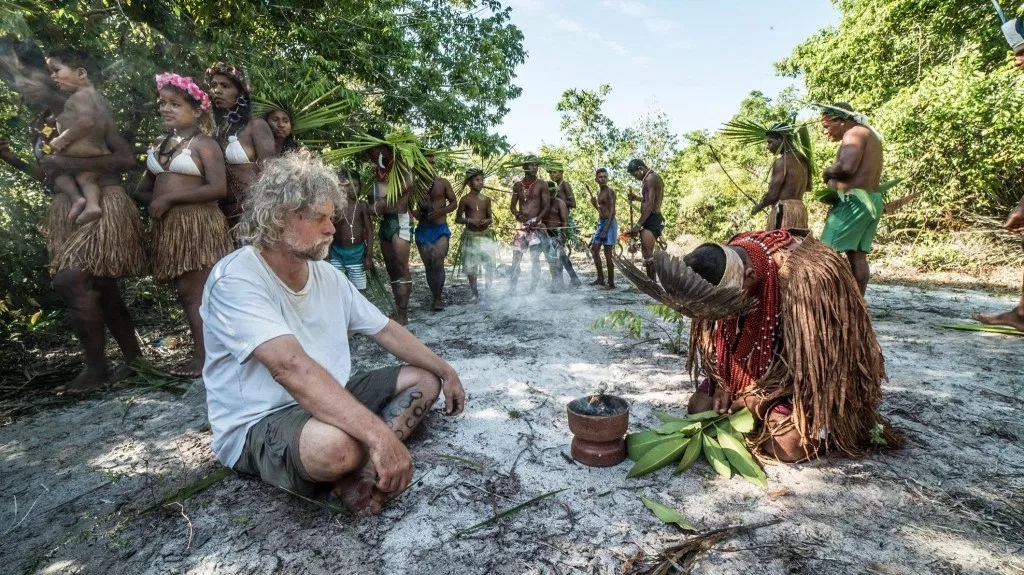

 In December 2018 the Australian Government passed the
  I feel that we need to find a way to liberate ourselves from centralized media and entertainment, and realize that we are not in fact consumers but actors. We need to get a bit uncomfortable and dim the ego, to dive deeper and find that it’s better to try and understand that we are all connected, organically. When we communicate, we don’t actually need to reach the whole world, we just need someone to listen and respond in some way. So it’s not mass media, it’s person to person communication. And to form a living community, we need to have a good platform and an inviting space. Radio is so very powerful because it can be very intimate, and it is free from the burden of images that instantly take hold of our thought, and thus gives room for your imagination.